
It’s 2:00 AM on a Saturday. You’re woken up by the sound of gushing water. Your water heater has burst, and your garage and living room are flooding. Your first instinct, after the panic, might be, “It’s the middle of the night. I’ll just shut off the water and call someone on Monday.”
This is the single most expensive mistake a homeowner can make.
“24/7 Emergency Response” isn’t a marketing gimmick. It is the most critical factor in preventing a manageable water incident from becoming a catastrophic, home-destroying disaster. Here are the facts of why you must act fast.
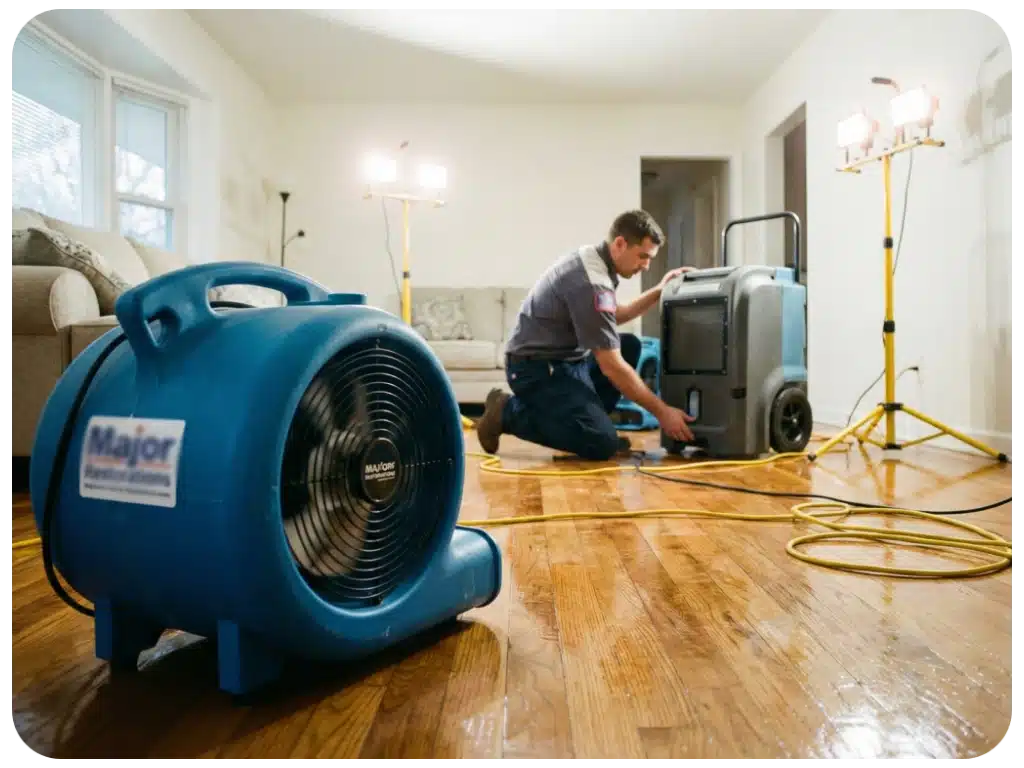 The “Golden Hours”: The First 24-48 Hours
Home restoration professionals refer to the first 24-48 hours after a water loss as the “golden hours.” What happens (or doesn’t happen) in this window will determine the final cost, the timeline, and the health of your home. The goal is simple. Get the water out, and get the drying process started, immediately.
The Enemy: Understanding “Secondary Damage”
“Secondary Damage” is the term for the cascading problems that happen after the initial leak. The initial, “primary” damage is the water. The secondary damage is the mold, rot, and structural failure that waiting causes.
A 24/7 response isn’t about fixing the primary damage; it’s about preventing the secondary damage.
The 3 Things That Happen When You Wait (The Ticking Clock)
When you shut off the water but “wait until Monday,” you are starting a ticking clock. Here is what is happening inside your wet walls.
Problem 1: Mold Growth (The 24-Hour Rule)
This is the big one, especially in humid Tampa Bay.
- In 1-24 Hours: Water is soaking into drywall, wood studs, and insulation.
- In 24-48 Hours: Microscopic mold spores, which are already present everywhere, “activate” in the presence of moisture. They begin to colonize and grow.
- In 48-72 Hours: You now have a visible, active mold colony. What was a “water damage” problem is now a “mold remediation” problem, which is far more expensive, complex, and may not be covered by your insurance if the insurer determines you were negligent by waiting.
Problem 2: Water Becomes “Black Water” (The 48-Hour Rule)
When looking at water damage restoration costs, it is categorized by its contamination level. When your “Category 1” (clean) supply line bursts, it’s a simple dry-out.
But after that clean water sits stagnant in your walls for 48 hours, it mixes with dirt, bacteria, and contaminants in your building materials. It is now re-classified as “Category 2” (Grey) or “Category 3” (Black) water.
This means a simple, “dry-in-place” job just became a “full-demolition” job. All because you waited.
Problem 3: Structural Damage Begins (Swelling & Warping)
Water and building materials do not mix.
- Drywall: Saturated drywall loses all structural integrity. It swells, bulges, and will eventually collapse under its own weight.
- Wood: Your wood subfloors, studs, and baseboards will absorb the water and swell. This causes hardwood floors to “cup” and “buckle” (a permanent, non-fixable-by-drying issue). It warps baseboards and door frames.
- Furniture: The finish on your wood furniture will be ruined, and particle board will disintegrate.
What “Emergency Response” Actually Means (A Step-by-Step)
When you call a 24/7 company like Major Restorations at 2:00 AM, here is what happens.
Step 1: The Phone Call (A Live Person)
You will not get a “call us back during business hours” recording. A live, trained, and calm person will answer the phone, listen to your emergency, and dispatch a team.
Step 2: The On-Site Arrival (Within Hours)
A professional, uniformed, and certified team will arrive at your home (often in 60-90 minutes). They are not there to “sell” you anything. They are there as first responders.
Step 3: The First Steps (Extraction & Mitigation)
They will immediately get to work:
- Assess: Use thermal cameras to see exactly where the water has gone.
- Extract: Use powerful truck-mounted extraction tools to remove all standing water.
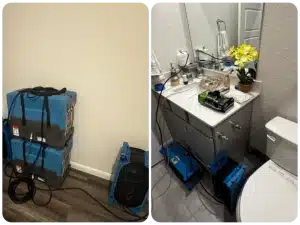
- Place Equipment: Begin placing industrial-grade air movers and dehumidifiers to start the drying process immediately.
How a Fast Response Protects Your Insurance Claim
This is the financial-survival part. Most insurance policies have a “Duty to Mitigate” clause. This requires you to take reasonable steps to prevent further damage.
- Waiting: Calling on Monday after a Saturday leak is a clear violation of this duty. Your insurer has the right to deny the “secondary damage” (like the mold or the warped floors), leaving you to pay for it.
- Acting Fast: Calling a 24/7 home restoration company proves you fulfilled your duty. The water restoration company will document the entire process, showing the insurer that you acted responsibly to minimize the claim. (We’ve written an in-depth guide to navigating the insurance claim process that explains this.) A fast response is the best way to ensure your claim is paid in full.
 Don’t Wait for “Business Hours”
A water loss is a fire-in-slow-motion. Every hour you wait, the damage gets more extensive, more toxic, and more expensive. A 24/7 response is not a luxury; it is the single most important decision you can make to save your home, your health, and your finances.
Frequently Asked Questions | Emergency Water Damage Response
Q1: What is "secondary damage"?
A1. “Secondary damage” is the cascade of problems that happen after the initial leak. The initial, “primary” damage is the water. The secondary damage is the mold, the rotting wood, the warped floors, and the buckled drywall that waiting causes. A 24/7 response is all about preventing this.
Q2. What is the IICRC and why does it matter?
A2. The IICRC is the independent body that sets the global “standard of care” for restoration. A certified IICRC technician knows the science of drying. They know how to classify water, set up a balanced drying system, and prevent mold. Hiring an IICRC-certified firm is your best guarantee that the job will be done right.
Q3. If I call at 2:00 AM, will I get a real person?
A3. Yes. True 24/7 emergency response companies will have a live, trained person answer the phone, ready to take your information and dispatch a team. You should not get an answering machine. If you do, call someone else.
Q4. I stopped the leak. Why is it an "emergency" if the water isn’t gushing anymore?
A4. The emergency is not the leak; it’s the water. The water that is already in your walls is a ticking clock. It is soaking into your home’s structure, and in 24-48 hours, it will start to grow mold. The “emergency” is starting the drying process before that happens.
Disclaimer: This article is for informational purposes only and does not constitute legal or insurance advice. Every water damage situation is unique. Please consult a certified professional for an accurate assessment of your property.

