The Tampa Bay Homeowner’s Guide to Hurricane Prep
What Experts See (And What You Can Prevent)

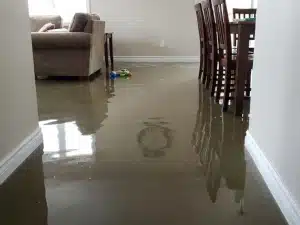
If you’re a Tampa Bay homeowner, you know the feeling. It’s a unique anxiety that starts around June 1st. That familiar ritual of watching spaghetti models, wondering, “Will it be a ‘nothing-burger’ or ‘the big one’?”.
Preparation is your only power against the storm. It’s how you minimize the chaos. This isn’t just another generic checklist. This is a battle plan based on the most common and costly damage restoration professionals see every single year in Pinellas and Hillsborough counties.
This is not just about boarding up windows. This is about protecting the entire envelope of your home and your financial well-being.
This is the single most important financial step you can take. Don’t just take photos. Walk through your home with your phone recording video. Open every closet, every cabinet. Talk as you record: “This is the 80-inch TV, bought in 2024”. This video is your most powerful tool for a smooth home insurance claim because it proves the condition of your property before the storm.
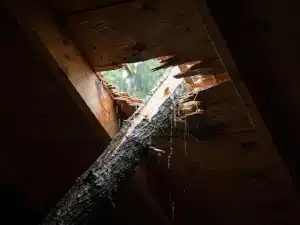
Restoration experts call them “projectiles”. If a branch is thick enough to dent your car, it’s thick enough to go through your roof. Get an arborist to trim back limbs, specifically looking for “V-shaped” trunks which are notoriously weak and prone to splitting.
Don’t wait until a storm is 48 hours out to find a stuck track or missing hardware. But the real culprit for catastrophic failure is often the garage door. If it fails, wind gets inside the home, and the positive pressure can lift the roof off like a can opener.
When 10 inches of rain falls, gutters clogged with pine needles turn into a waterfall… right down your foundation. Or, even worse, the water dams up and flows under your shingles and soffits, causing a massive roof leak 20 feet from the edge.
In a 100 mph wind, that patio umbrella, the potted plants, and the grill are not “things”—they are battering rams. Have a non-negotiable plan for where every single outside item goes.
This is your damage control kit. Go buy a few large plastic tarps, heavy-duty duct tape, and 5-gallon buckets. A small, containable roof leak that you can manage with a bucket is far better than an ignored one that causes a ceiling to collapse.
You can call your insurance agent and ask about wind mitigation discounts. A “wind mitigation inspection” creates a report on your home’s storm-resistant features (like roof-to-wall straps) and can often lower your premium.
After a storm, a common (and cruel) issue is a burst pipe from a tree root or debris. Go find your main water shut-off right now and tag it.
Add the number for Major Restorations (727) 609-1991 to your phone as “Emergency Restoration“. You don’t want to be Googling “water damage help” while your ceiling is caving in.
Find your “Declarations” page. What is your hurricane deductible?. Is it a flat $2,000 or 2% of your home’s value?. Knowing this number now manages your expectations. Also, remember: Standard homeowners insurance does not cover flood water.
The 72 hours after the storm are the most vital for preventing secondary damage, like mold.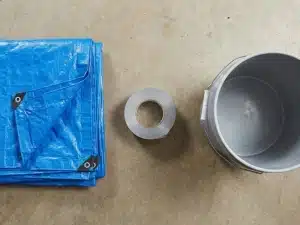
(Handling this call and the following claim can be the most stressful part of the process. We’ve written a complete step-by-step guide to the Florida water damage insurance claim process to help you) .
Preparation gives you control. But when a storm is stronger than your plan, you are not alone.
Once it’s safe, your first call should be to your insurance company to start a claim, and your second should be to Major Restorations. We will be on-site to secure your property, prevent further damage, and assist you through the insurance claims process. We bring the calm and a plan to handle the chaos.
If the worst happens, call us at (727) 609-1991 or contact us online today.
Q1. My house isn’t in an evacuation zone. Do I still need to worry about storm surge?
A1. Yes. While evacuation zones are for surge, all of Tampa Bay is at risk from rain-based flooding and high winds. A severe storm can cause roof leaks or send a tree through a window regardless of your zone.
Q2. What’s the first thing I should do after a hurricane passes?
A2. Once you’re sure it’s safe, your first step is to document everything. Before you move or clean anything, take hundreds of photos and videos. This is the single most important step for a smooth homeowners insurance claim.
Q3. Will my insurance cover a hotel if I have to evacuate or my home is damaged?
A3. Most homeowners’ policies include “Loss of Use” coverage. This pays for reasonable living expenses if your home is uninhabitable due to a covered event. Check your policy’s “Declarations” page for this coverage.
Q4. I have a small roof leak. Do I really need to call for an emergency tarp?
A4. Yes, 100%. Your insurance policy has a “Duty to Mitigate,” meaning you’re required to prevent further damage. Calling a professional for an emergency tarp proves you did this and stops a small leak from turning into a massive mold problem.
Disclaimer: Major Restorations is a licensed contractor, not a public adjuster or insurance agent. Insurance references are for educational purposes; always verify specific coverage with your carrier. All DIY preparation tips—such as tree trimming or gutter cleaning—are performed at the homeowner’s risk. Please prioritize safety.

 Florida Water Damage Insurance Claims: A Step-by-Step Guide
Scroll to top
Florida Water Damage Insurance Claims: A Step-by-Step Guide
Scroll to top