
A pipe bursts or an appliance fails, and in the panic of a water damage emergency, your first thought is “How do I make it stop?”. Your second is, “Is this covered?”.
For Tampa, St. Petersburg, and Clearwater homeowners, handling the water damage insurance claim process can feel as overwhelming as the damage itself.
This guide provides a clear, step-by-step map to help you navigate the process calmly and get the full coverage you’re entitled to.
The First 24 Hours: Your 3-Step Emergency Plan
What you do before you even file the claim is critical.
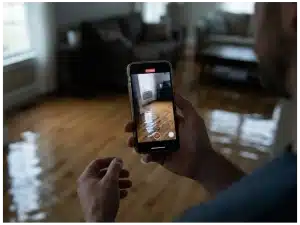
- Stop the Water. First, stop the source. Find your home’s main water shut-off valve and turn it off. This is your #1 priority.
- Call a Professional Restoration Company. Not your insurance agent. Your first call after the water is off should be to a 24/7 emergency restoration company. This is called “mitigating your damages,” and it is a requirement of your policy.
- Document Everything. Get your phone. Take hundreds of photos and videos. Record the water pouring in, the standing water, the damaged items. You cannot have too much documentation.
Understanding Your Florida Policy: What’s Actually Covered?
Not all water damage is created equal in the eyes of an insurer.
The “Sudden & Accidental” Rule
This is the core concept. Homeowners insurance is designed to cover damage that is sudden and accidental.
- COVERED: A pipe suddenly bursts. An A/C drain line clogs and overflows. A washing machine hose fails.
- NOT COVERED: A slow, dripping leak from a faucet you ignored for six months. A shower tile with failed grout that has been leaking for a year. Damage from “neglect” or “failed maintenance” is a homeowner’s responsibility and will be denied.
Flood Water vs. Water Damage: The What’s the Difference
This is the most painful point of confusion. “Water damage” in your policy refers to water from inside your home. “Flood damage” refers to rising water from outside your home (like a storm surge or overflowing river).
Your homeowners policy DOES NOT cover flooding.
You must have a separate Flood Insurance policy (usually through the NFIP) to be covered for storm surge or rising groundwater.
Florida’s Unique “AOB” Landscape
You may hear the term “Assignment of Benefits” (AOB). This is a legal document where you sign over the rights to your insurance claim to a contractor. Florida has strict laws around these because they were often used to inflate claims. Be extremely wary of any contractor who pushes you to sign an AOB. You should always stay in control of your own claim.
The Claim Process: A Step-by-Step Walkthrough
Once the immediate emergency is being handled by restoration pros, here is the claims process.
Step 1: The First Call (To Your Insurer)
Now that the leak is stopped and pros are on the way, call your insurance company’s 24/7 claims hotline. Have your policy number ready. You will be assigned a claim number. Tell them, “I have a sudden and accidental water loss, and I have already called a professional water damage restoration contractor to mitigate the damage as required by my policy.”
Step 2: The Second Call (To a Restoration Pro)
If you haven’t already, call a licensed home restoration company. They will arrive (often within an hour), assess the damage with moisture meters and thermal cameras, and begin water extraction and placing drying equipment.
Step 3: The Adjuster’s Visit & Scope of Work
Your insurer will assign an “adjuster” to your claim. They will schedule a time to come to your home and inspect the damage. The restoration contractor you hired should also be present for this meeting. The restoration pro will walk through with the adjuster, pointing out the full extent of the damage (including hidden moisture) and providing their own estimate and documentation.
Step 4: The Work is Performed
Once the “scope of work” is agreed upon between the adjuster and the restoration company, the full work begins. This includes drying, any necessary demolition (e.g., removing wet drywall), and cleaning.
Step 5: Getting Paid (The Deductible & Payout)
Your insurer will send you a check for the covered amount, minus your deductible. Your deductible is the amount you are responsible for. If the total bill is $10,000 and your deductible is $2,000, the insurer will pay $8,000. You are responsible for paying the restoration company the $2,000 deductible.
Your “Duty to Mitigate”: The Most Important Part of Your Policy
This is the most important legal concept for you to understand. Buried in your policy is a “Duty to Mitigate” clause. This means that you are legally required to take reasonable steps to prevent further damage after a loss.
- What it means: You cannot let a leak go for 3 days while you “wait to hear from your adjuster.”
- Why it matters: If you wait, and that “clean” water turns into a massive mold problem (secondary damage), your insurer has the right to deny the mold portion of the claim, stating that you failed your duty to mitigate.
- The Solution: Calling a 24/7 water restoration company immediately fulfills your duty to mitigate.
A “Preferred Vendor” vs. Your Right to Choose
When you call your insurer, they may say, “We have a preferred vendor we can send.” You need to know this:
- “Preferred vendors” work for the insurance company. Their business model is based on keeping the insurance company happy, which often (but not always) means keeping costs low.
- You have the legal right to hire any qualified contractor you choose.
- Hiring an independent, certified house restoration and repair company means you have an expert who works for you. Their loyalty is to you and to restoring your home correctly, not to saving the insurance carrier money.
Partner with Major Restorations: Tampa Bay’s Restoration Experts
Water damage claims are complex, but homeowners in Tampa, St. Petersburg, and Clearwater do not have to manage them alone. When you choose Major Restorations, you hire a local team dedicated to you—not the insurance carrier.
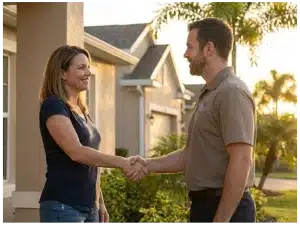
We protect your interests during the claims process:
- We Speak the Adjuster’s Language: We communicate directly with the insurer to prevent misunderstandings.
- We Use Industry-Standard Estimates: We utilize carrier-aligned software to create precise estimates for faster approval.
- We Prove Your Loss: We submit complete photographic documentation to justify every part of your claim.
- We Remove the Burden: We handle the technical requirements so you can focus on your family.
Secure your home and your claim. Contact our 24/7 local emergency team today.
Frequently Asked Questions | Homeowner Insurance Claims
Q1. Will filing a water damage claim make my insurance rates go up?
A1. It’s possible, but not filing a claim can be a much more expensive mistake. A small, “out-of-pocket” cleanup you try to handle yourself can lead to hidden mold, which can cost 5x more to fix later and won’t be covered. It’s always best to call a professional immediately to understand the true scope of the damage.
Q2. What is a "deductible" and how does it work?
A2. A deductible is the amount of money you are responsible for paying before your insurance company pays the rest. If your claim is $10,000 and your deductible is $2,000, your insurer will pay $8,000, and you will pay the $2,000 to the restoration firm.
Q3. What is "Loss of Use" coverage?
A3. “Loss of Use” (also called “Coverage D”) is a part of most homeowners policies. It pays for your reasonable living expenses (like a hotel and meals) if your home is unlivable due to a covered loss, such as a major fire or a burst pipe that requires extensive restoration.
Q4. Why can’t I just have my regular plumber or handyman handle the cleanup?
A4. A plumber fixes the pipe. A restoration professional fixes the damage. They are IICRC-certified in the science of drying, sanitizing, and mold prevention. They use specialized equipment (thermal cameras, dehumidifiers) and, crucially, they know how to document the loss and work directly with your insurance adjuster to get your claim approved.
Disclaimer: The information provided in this guide is for general informational purposes only and does not constitute legal advice or professional insurance adjusting advice. Insurance policies vary significantly by carrier, coverage limits, and specific endorsements. While Major Restorations works closely with insurance carriers to assist our clients, we recommend consulting with your specific insurance agent, a licensed public adjuster, or an attorney to understand the full details and exclusions of your policy. Major Restorations is a licensed General Contractor and restoration specialist, not a public adjusting firm or law practice.

